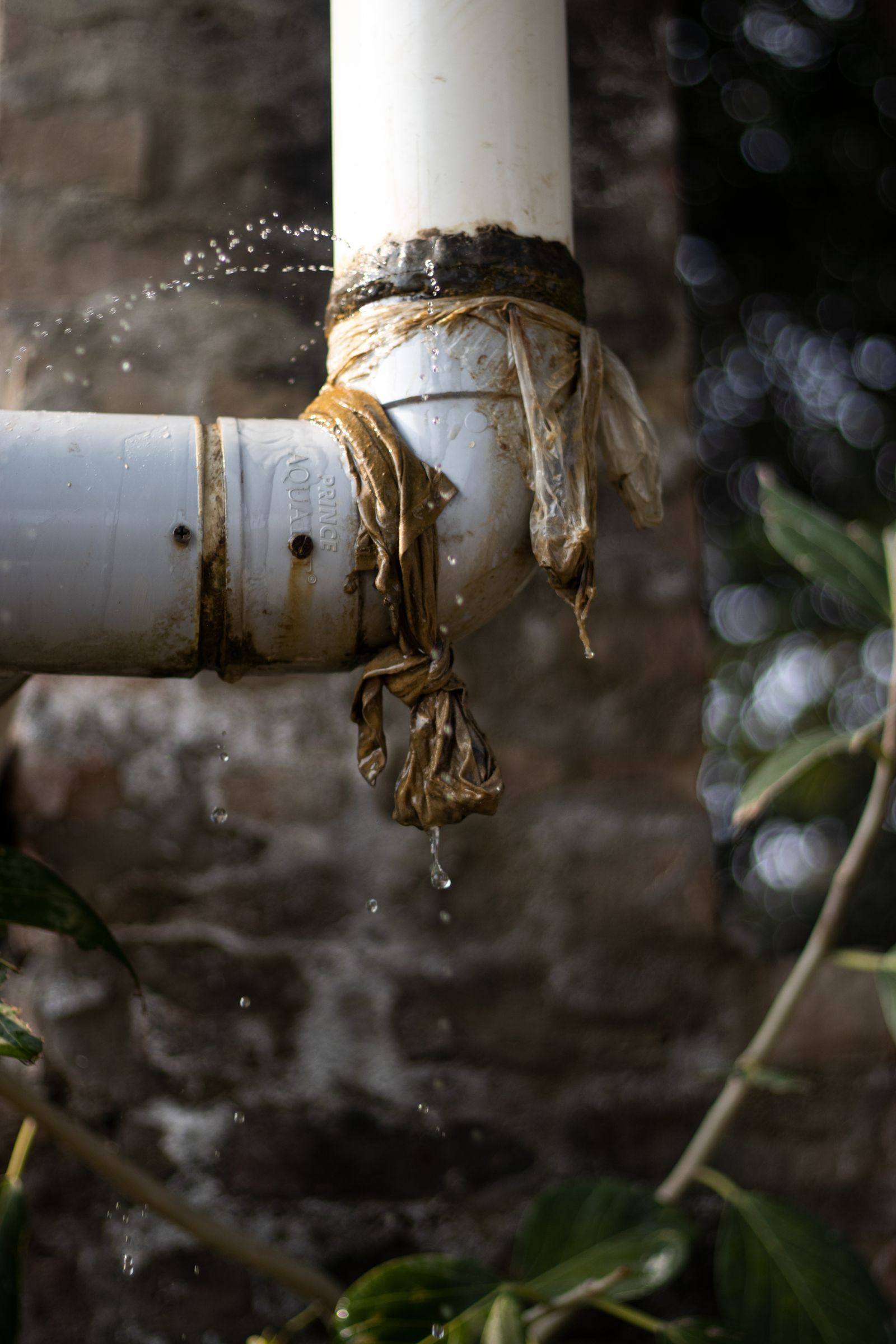
Where pipes break in Valley homes
“Burst pipe” covers a lot of situations. The water can come from:
- Supply lines under sinks and behind toilets: the short flexible hoses between the shut-off valve and the fixture.
- Pipes inside walls that feed showers, tubs, sinks and the washer box.
- Pipes above the ceiling. In some homes, water lines run through the attic, so a break shows up as a stain or a drip overhead.
- Fittings and valves that crack or separate at a joint.
Leaks in lines under the concrete floor have their own page: slab leak water damage.
Two local details are worth knowing. The City of Phoenix’s water quality report says hard water can cause some types of scaling in pipes and water heaters, and the city lists mineral buildup in galvanized plumbing among the things to check when water use runs high. And many Valley homes are decades old: Census data puts the median Phoenix home’s build year at 1985, with about 41.6% built before 1980.
What to do first
- Shut off the water. The City of Phoenix’s advice for a broken pipe is short: turn off the water at the main shut-off valve and call a plumber. The valve is usually at the front of the house near a hose bib, where a pipe comes out of the ground and into the wall. Our shut-off valve guide explains where else to look.
- Deal with electricity. If water is running near outlets, light fixtures or the panel, turn off power to that area at the breaker, but only from a dry spot. Otherwise, call an electrician.
- Watch the ceiling. A ceiling that sags or bulges with water can come down. Keep people and pets out from under it.
- Take photos and video of the damage before anything is moved or cleaned up.
- Clear the area. Empty the cabinet under a leaking sink, open the doors, and move rugs, furniture and electronics away from the water.
- Call a plumber and a restoration provider. If there’s standing water, emergency water extraction comes first.
Plumber or restoration provider: who does what
A burst pipe is two jobs, done by different trades.
- The plumber finds the break, repairs or replaces the pipe, and gets your water back on.
- The restoration provider removes standing water, finds how far it spread, takes out materials that can’t be saved, dries the structure and checks for mold.
The two often overlap on the same day. The plumber may need to open a wall or ceiling to reach the pipe. If that section is wet anyway, the restoration provider may be removing drywall in the same spot. Tell each of them what the other is doing, so nobody cuts twice or patches a wall that’s still wet.
Some restoration providers also rebuild drywall, paint and flooring. Others stop once everything is dry. Ask which one you’re talking to.
When water comes through the ceiling
Water from a pipe above the ceiling doesn’t always drip straight down. It can run along the framing and show up several feet from the break, soak the insulation, and pool on the back of the drywall until it sags.
Sagging ceiling drywall generally can’t be saved, and the EPA says wet insulation should be thrown out and replaced. The EPA lists the inside of walls around leaking pipes among places where mold hides, so the provider should check around the wet spot, not just the visible stain.
Not every ceiling stain is a pipe. An attic air conditioner’s drain pan can overflow too, and ENERGY STAR warns that a plugged condensate drain can cause water damage in the house. That kind of leak is covered under water heater and appliance leaks.
Why drywall gets cut
Cutting into walls has a purpose. Water inside a wall cavity can’t dry through painted drywall in any reasonable time, and wet insulation holds water against the framing.
The EPA’s guidance for clean water says drywall may be dried in place if there’s no obvious swelling and the seams are intact, and that the wall cavity should be ventilated if possible. When drywall is swollen or the cavity is full of wet insulation, the usual approach is to cut out the wet section, often a strip along the bottom of the wall, and dry the framing behind it. When the drywall is sound, small holes behind the baseboard can be enough to get air inside. The structural drying page explains how that drying is measured.
Older homes need extra care before cutting. The EPA says homes built before 1978 are more likely to have lead-based paint, and that cutting and sanding can create hazardous lead dust. The EPA also lists textured paint and patching compounds on walls and ceilings among materials that may contain asbestos, and says testing by a qualified lab is the only way to be sure. If your house is older, ask the provider how they check for both before opening walls.
Paperwork for your insurer
Coverage often turns on whether the break was sudden or the leak was slow. Either way, these steps help:
- Photos before cleanup. Arizona’s Department of Insurance and Financial Institutions advises taking pictures of the damage before any water mitigation, plumbers or restoration contractors show up.
- Ask the plumber for a written note on what failed, with a photo of the broken part.
- Call your insurer early. The same department advises calling your insurer before calling a contractor, and not taking a contractor’s word for what’s covered.
- Save receipts for anything you pay for, including the plumber.
Our insurance guide explains how policies usually treat sudden and gradual leaks.
Questions to ask the restoration provider
- How far do you think the water went, and how will you check behind walls and under flooring?
- Which drywall, insulation or cabinets need to come out, and why?
- How will you coordinate with my plumber on wall and ceiling openings?
- Will you share daily moisture readings and photos?
- What is your Arizona contractor license number? Look it up with the Arizona Registrar of Contractors, and ask for proof of insurance.