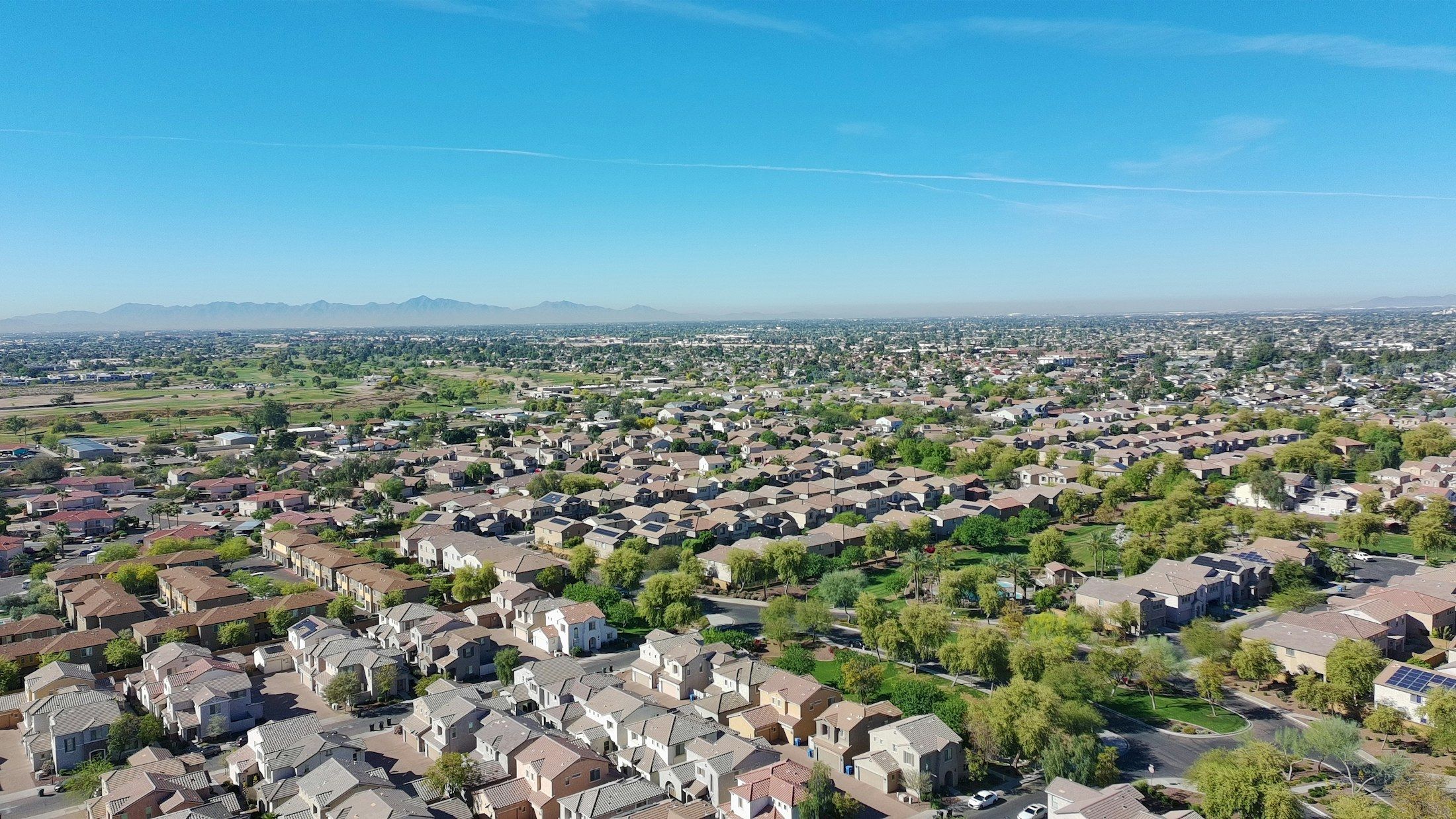
Gilbert’s young housing
Gilbert’s growth came late. Census counts show about 5,700 residents in 1980, nearly 110,000 by 2000 and more than 267,000 by 2020. U.S. Census Bureau survey data (American Community Survey, 2020–2024) puts the median Gilbert home at 2003, the newest of the five East Valley cities we cover. About 60% of homes were built in 2000 or later, and only about 4% before 1980.
Age still varies across town. In north Gilbert’s ZIP codes 85233 and 85234, the median home dates to 1994. In the south, ZIP codes 85295, 85297 and 85298 have medians from 2007 to 2009. ZIP codes don’t follow town limits exactly, so treat these as a general picture.
New houses still leak
A newer home avoids some problems of older ones, but it has the same parts that wear out:
- Water heaters. ENERGY STAR puts the typical life of a tank water heater at about 13 years. A house built in the 2000s that still has its original tank is past that point. Leaks at seams, rust in the water and rumbling from sediment are signs it’s near the end.
- Supply lines and hoses. The braided lines under sinks and toilets, washing machine hoses and refrigerator water lines wear out on their own schedule, however new the house is. A split line keeps running until someone closes a valve. See burst pipe water damage.
- AC condensate drains. ENERGY STAR warns that a plugged condensate drain can cause water damage in the house. The Department of Energy’s Building America program adds that clogged drains and overflowing pans in attics and closets can go unnoticed long enough to cause severe damage. A secondary pan with a switch that shuts the unit off when water rises is one safeguard.
More on these in water heater and appliance leaks.
Where storm water collects in Gilbert
The Town of Gilbert says new residents are often surprised to learn that parts of town can flood. Gilbert slopes from east to west, and in heavy rain, the town notes that water can build up on the east side of railroad and canal embankments. Water moving west backs up against those raised lines.
A few more things the town points out:
- Parks that double as basins. Freestone and Crossroads parks serve as retention facilities, and many of Gilbert’s retention basins are community parks. A flooded park after a storm is usually doing its job.
- Blocked outlets. Leaves and grass clippings can block storm water outlets and raise the risk of flooding. Keep yard waste out of gutters and street drains.
- Regional protection. The Eastern Maricopa Floodway intercepts flood flows from the north, plus flows from the Sonoqui and Queen Creek washes, before they reach Gilbert.
Big storms still get through. During a multi-day storm in October 2025 that brought 3.5 to 4.5 inches of rain to the East Valley, the National Weather Service documented flooding on Loop 202 near Cooper Road that closed that stretch. NWS photos from September 8, 2014 also show flooding near Val Vista and Germann.
Water that rises outside and flows into the house is flood damage, which FEMA says most homeowners policies don’t cover. For roof leaks and storm cleanup, see monsoon and storm water damage.
Gilbert’s hard water
Gilbert’s water comes from the Salt and Verde rivers through SRP, from the Colorado River through the Central Arizona Project, and from town wells. The 2024 water quality report gives an average hardness of 12.96 grains per gallon, with samples ranging from about 6 to 21.
Hard water leaves scale and sediment in tank water heaters. A report prepared for the U.S. Department of Energy recommends draining storage tanks every year in hard-water areas to clear sediment.
Checking for a leak you can’t see
Leaks in newer homes hide inside walls, behind cabinets and under the slab. The EPA’s WaterSense program suggests a simple test: read your water meter, use no water for two hours, then read it again. If the number changed at all, you probably have a leak. Make sure irrigation and the water softener aren’t running during the test. If the leak seems to be under the floor, see slab leak water damage.
If water is on the floor right now
- Close the valve at the fixture or appliance, or shut off the main water valve. The shut-off valve guide shows what to look for.
- Stay out of standing water near outlets, cords or appliances.
- Take photos and video before you move anything.
- Call to reach an independent restoration provider that serves Gilbert. If a line or tank needs repair, you’ll also need a plumber.