The Town, not the Phoenix village
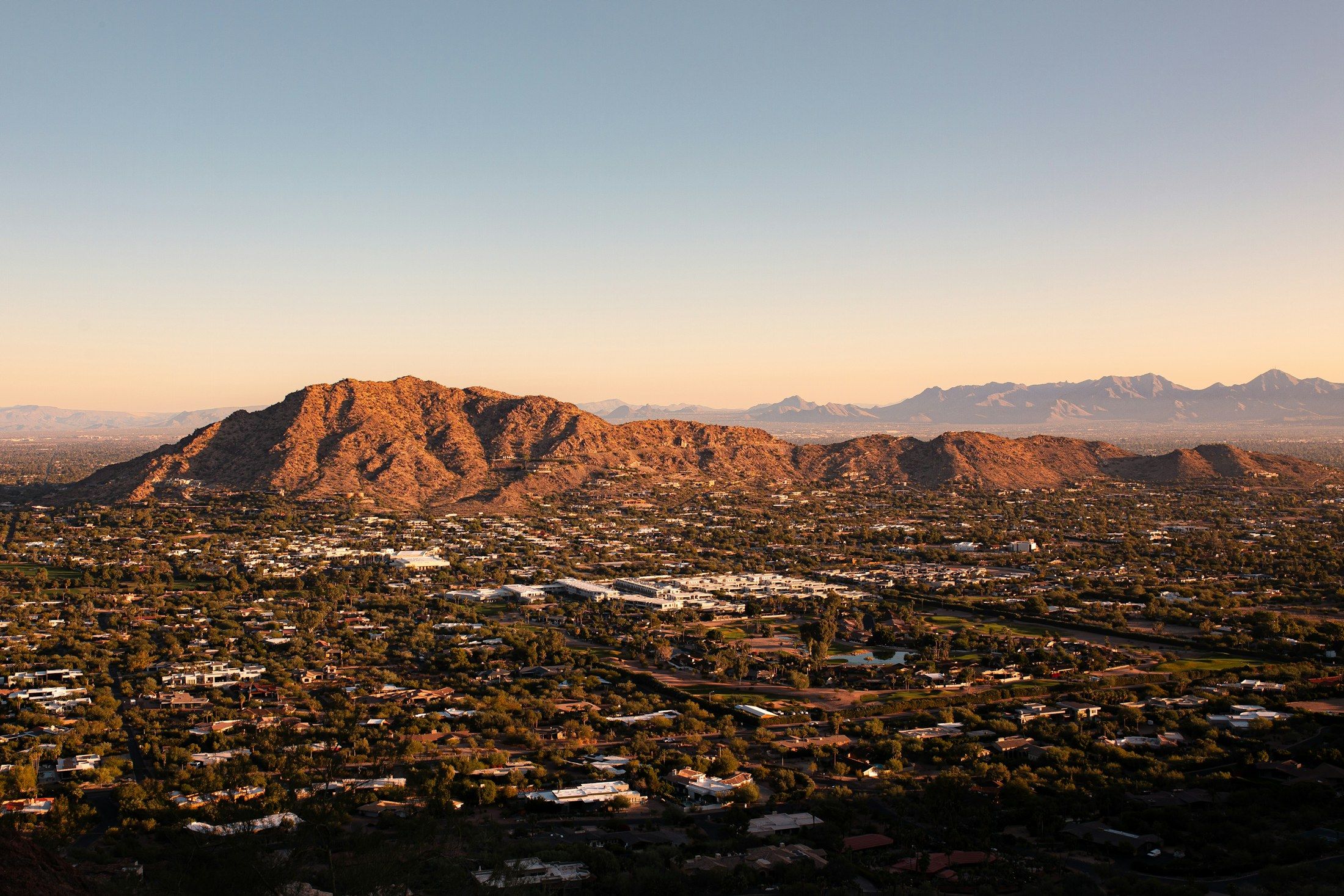
The Town of Paradise Valley is its own municipality. It incorporated on May 24, 1961, when residents wanted to keep zoning to a minimum of one house per acre, keep the area entirely residential and keep government regulation to a minimum. The Town puts its area at about 16.5 square miles, mostly around and between Camelback and Mummy Mountains. Phoenix borders it on the south, west and northwest, and Scottsdale on the east and northeast. Almost all of the Town lies in ZIP code 85253, which also takes in parts of Phoenix and Scottsdale.
Phoenix also has a planning area called Paradise Valley Village. It shares a boundary with the Town but doesn’t overlap it. If you live in the Phoenix village, our North Phoenix page covers your area.
Homes in the Town
Census figures (American Community Survey, 2020–2024) describe a town of owner-occupied houses. About 95% of occupied homes are lived in by their owners, and 96% are single-family detached. The median home was built in 1985, with a wide spread around it: roughly 42% were built before 1980, about 31% between 1980 and 1999, and about 27% in 2000 or later. The Town describes residences that “abundantly use low-impact, Southwestern ranch architecture and landscaping.”
What that means when water gets in:
- Older houses. The EPA notes that homes built before 1978 are more likely to have lead-based paint, and cutting out wet drywall can create lead dust. Ask the provider how they handle it.
- Time away from home. A leak in an empty house runs until someone notices. For long periods away, the City of Phoenix suggests shutting off the water to the house and to the water heater.
- Leaks you can’t see. EPA WaterSense suggests reading your water meter before and after a two-hour period with no water in use. If it changes at all, you probably have a leak. A line under the slab is one possibility; see slab leak water damage.
Dry washes across residential lots
The Town’s Storm Water Management Plan says “desert dry washes cross many residential lots and are used by homeowners as avian habitat and landscaping, in addition to natural drainage.” It also notes that almost a third of the Town’s yearly precipitation falls in July, August and September.
Two examples from the plan:
- Cudia City Wash begins on the side of Mummy Mountain, crosses the central part of the Town and feeds a retention basin connected to the Arizona Canal Diversion Channel.
- The Mountain View and Berneil Ditches collect local storm runoff and carry it into Indian Bend Wash.
If a wash crosses your lot, it’s doing drainage work for the neighborhood. Before the season, look at where water will go when it runs, and check with the Town before changing the wash itself. The City of Phoenix’s monsoon checklist is a useful starting point for any lot: fix landscaping so water runs away from buildings, clean out drywells and clear roof drains or scuppers.
Indian Bend Wash
Indian Bend Wash runs through a significant portion of the Town, which calls it “the major collector of runoff from Scottsdale and Phoenix to the north and west.” The Town notes that the wash “had been subject to periodic flooding,” and that since the late 1970s the channel has been redesigned, narrowed and stabilized. It can still run high: the National Weather Service reported it above flood stage near Indian School Road in Scottsdale on September 26, 2025. For roof leaks and storm water that gets inside, see monsoon and storm water damage.
Flood insurance in the Town
The Town takes part in the National Flood Insurance Program, and it says “you can purchase flood insurance whether you are in a floodplain or not.” That matters because FEMA says most homeowners insurance doesn’t cover flood damage, and Maricopa County notes that 1 in 4 flood insurance claims come from outside a floodplain. Arizona’s Department of Insurance and Financial Institutions defines flood as water that enters the home from outside at ground level. Our insurance guide explains how that differs from a leak inside the house.
When water gets in
- Stop the water at the fixture or the main shut-off valve. The shut-off valve guide shows what to look for.
- Stay clear of water near outlets, cords or the electrical panel.
- Take photos. Arizona’s insurance department suggests doing this before any mitigation, plumbers or restoration contractors arrive.
- Call your insurer, then call to reach an independent restoration provider that serves Paradise Valley.