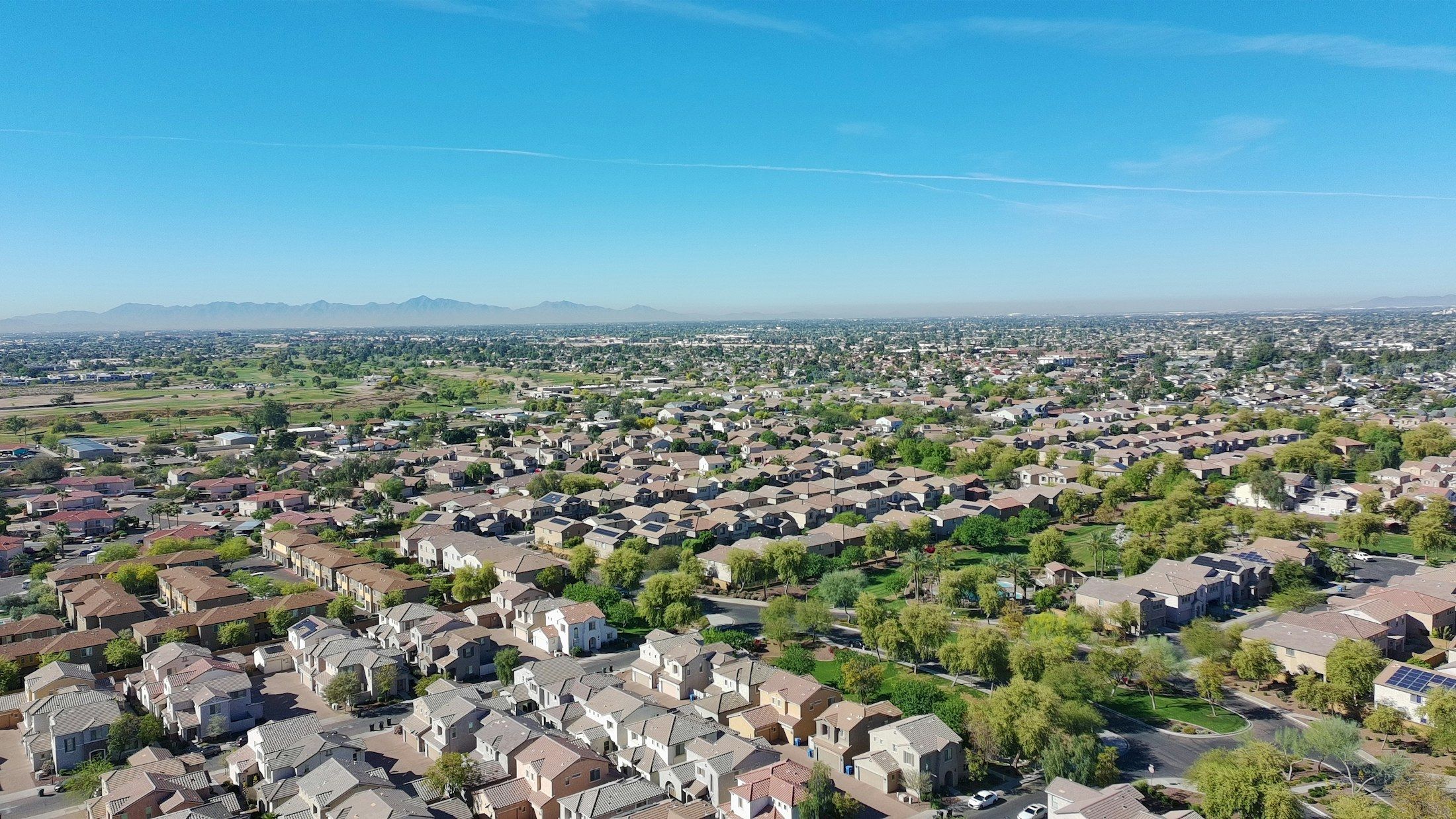
A young city on a lot of land
Buckeye covers about 395 square miles of land, according to Census Bureau geography files, and most of its houses are recent. U.S. Census Bureau survey data (American Community Survey, 2020–2024) puts the median Buckeye home at 2011. About 90% of homes were built in 2000 or later, and fewer than 4% predate 1980. The 2010s were the busiest decade, and about 14% of homes date from 2020 or later.
In a city this new, the usual sources of water damage are appliances, fixtures and storms rather than decades-old plumbing.
What still fails in a newer house
Newer homes still have parts that wear out:
- Water heaters. ENERGY STAR puts the typical tank life at about 13 years. A home built in 2011 that still has its first tank is past that point.
- Supply lines. The City of Buckeye tells residents to check under sinks and to look at the supply lines to water heaters, filters, ice makers and reverse osmosis units. A split line under a sink keeps running until someone closes a valve. See burst pipe water damage.
- AC condensate drains. ENERGY STAR warns that a plugged condensate drain can cause water damage in the house. The guide on AC water leaking through the ceiling covers the warning signs.
More on these in water heater and appliance leaks.
Flood irrigation is on the owner
The City of Buckeye delivers flood irrigation to select areas. Homes south of the Southern Pacific Railroad get water from the Buckeye Water Conservation and Drainage District, and homes north of Baseline Road in the Valencia subdivision get it from the Roosevelt Irrigation District.
The city is clear about who carries the risk: “It is the responsibility of the home owner to ensure the property is ready to receive and retain irrigation water. The city is not responsible for any damages incurred if the property is not ready to accept irrigation.” Before each delivery, the city asks owners to fill low spots in berms, keep inlets clear and move anything in the yard that water could damage.
Wind, rain and washes
The August 9, 2026 storm
A line of thunderstorms moved west along I-10 through Tolleson, Litchfield Park, Avondale, Goodyear and Buckeye. The National Weather Service reported a peak gust of 84 mph at a volunteer weather station in Buckeye and 73 mph at the Buckeye Municipal Airport. Along the storm’s path, more than 50,000 SRP and APS customers lost power, and the NWS noted destroyed carports, blown-in garage doors and roof parts blown off.
Wind damage often turns into water damage later, when the next rain gets through a lifted section of roof. Have the roof checked and watch for new ceiling stains. See monsoon and storm water damage.
Stay out of flowing washes
On October 12, 2025, a driver drowned in Waterman Wash, south of Buckeye, when floodwater swept the vehicle away, the NWS reported. In October 2022, heavy rain sent more than 1,500 cubic feet per second down the same wash, and a vehicle was washed off Narramore Road at a low-water crossing near Buckeye.
The Flood Control District of Maricopa County says six inches of water can knock you off your feet and two feet can float a car. Never drive into a flooded wash or around a barricade. Under Arizona’s “Stupid Motorist Law,” a driver who does and gets stranded may have to pay part of the rescue cost.
Who supplies your water
Buckeye isn’t served by a single water system. The city publishes separate water quality reports for systems including Festival, Sundance Sunora, Tartesso and Sweetwater, and some areas inside city limits get water from EPCOR or Arizona Water Company instead. Check which provider serves your address.
The city’s 2024 report doesn’t list a hardness figure, so for softener settings or water heater upkeep, go by your provider’s current report.
Checking for a hidden leak
The City of Buckeye suggests a meter test: turn off everything that uses water, write down the reading, wait 20 minutes and read it again. If the numbers or the sweep hand moved, you have a leak. The city also warns that a broken underground irrigation line can lose more than 300 gallons an hour without showing at the surface.
If the yard, toilets and fixtures check out, the leak may be under the slab. See slab leak water damage.
What to do first
- Close the house shut-off valve. The city says it’s usually at the front or side of the house near the hose spigot.
- Stay out of standing water near outlets or cords.
- Photograph the damage before you move anything.
- Call to reach an independent restoration provider that serves Buckeye, and a plumber or roofer for the repair.