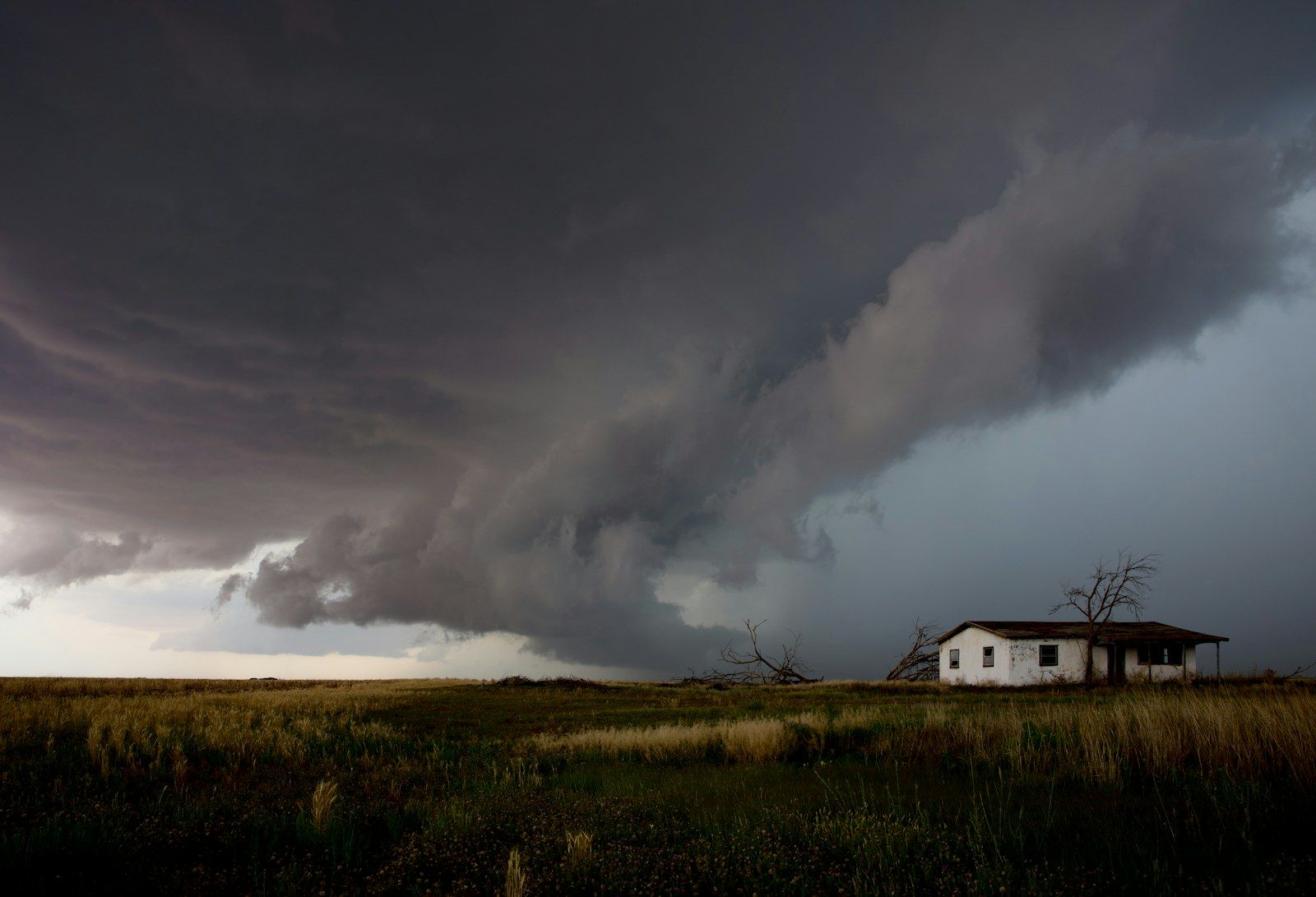
Why monsoon storms find weak spots
Since 2008, National Weather Service offices in the Southwest have used fixed dates for the monsoon: June 15 through September 30. The City of Phoenix says storms usually peak between mid-July and mid-August.
Two things about these storms are hard on a roof. The NWS says microburst winds are commonly 40 to 60 mph and can exceed 100 mph at times, which is enough to lift or break roofing. And the rain comes fast. On September 16, 2026, totals from northern Pinal County through northern Maricopa County reached 2 to 4 inches, most of it within a two- to three-hour period, according to the NWS.
Heavy rain finds any gap in a roof, and it pools wherever it can’t drain away. If your home has a flat roof, debris in the roof drains or scuppers can hold water on the roof until it finds a way in.
Storms don’t always keep to the calendar. After an October 13, 2025 microburst in Tempe, an NWS damage survey supported gusts of about 80 to 90 mph, with roofs blown off buildings along a corridor just east of I-10.
While it’s still raining
Stay off the roof. The NWS lists lightning and damaging winds among the monsoon’s hazards. Nobody should be on a wet roof in a storm. The roof can wait until the weather clears and a roofer can get up there.
Catch the water. Put buckets, pots or a trash can under each drip, with towels around them to catch the splash. Empty them before they overflow.
Move what you can. Get furniture, rugs, electronics, papers and boxes out from under the leak. Cover anything too heavy to move with plastic sheeting.
Stay out from under a sagging ceiling. Wet drywall is heavy. A ceiling that bulges or sags with water can come down, along with the water held above it. Keep people and pets out of that room.
Water near lights and outlets
Water dripping through a light fixture, a ceiling fan or near an outlet is an electrical hazard. Don’t touch the fixture or its switch.
The CDC says that if electrical circuits or equipment have gotten wet or are near water, turn off the power at the main breaker or fuse on the service panel. Do that only from a dry spot. If you’d have to stand in water to reach the panel, call an electrician. The CDC also says to have an electrician check the system before the power goes back on.
Right after the storm passes
- Take photos and video before cleanup. Get the ceiling stains, the drips, the wet floor and belongings, and any roof damage you can see from the ground. Arizona’s Department of Insurance and Financial Institutions (DIFI) advises taking pictures before any water mitigation, plumbing or restoration contractor shows up.
- Call your insurance company. DIFI suggests calling before you call a contractor and confirming what will be covered. Write down the claim number, who you spoke with and when.
- Get the roof covered. Policies generally expect you to protect your home from further damage. The NAIC’s examples include boarding it up. A roofer can put a temporary cover over the damaged area until the repair. The Insurance Information Institute says to save receipts, since you may be able to submit them for reimbursement later.
- Keep damaged items. The Insurance Information Institute advises against throwing them out until the adjuster has visited.
- Start drying the inside. Don’t wait for the roof repair. The EPA advises drying water-damaged areas within 24 to 48 hours to prevent mold growth.
After a big storm, be wary of anyone who shows up at the door. DIFI advises avoiding high-pressure sales and people who come door to door offering services you didn’t ask for.
Our first-hour guide has the full checklist for any kind of leak.
Rain through the roof vs flood water
For insurance, the way water came in can matter as much as how much of it there was.
- Flood is water from outside at ground level. DIFI defines flood as water that enters the home from the outside at ground level, and says that coverage requires a separate policy. FEMA says most homeowners insurance does not cover flood damage. A National Flood Insurance Program policy typically has a 30-day waiting period before it takes effect.
- Rain through a damaged roof isn’t flood under that definition. Whether your homeowners policy pays for it depends on your policy and on why the roof let water in.
- Upkeep is the owner’s job. The NAIC says a homeowners policy isn’t a maintenance contract, and that you’re responsible for repairing your roof when it begins to leak. The Insurance Information Institute says policies won’t cover damage due to lack of maintenance.
A roof torn open by a microburst and a roof that has leaked a little every summer may be treated very differently. Read your own policy and ask your insurer. DIFI also warns not to take a contractor’s word for what’s covered.
If water came in both ways during the same storm, photograph each one separately: the ceiling and roof damage, and the water line on the walls and the doors where runoff got in. Our insurance guide covers the claim process.
The source matters for the cleanup, too. Under the restoration industry’s IICRC standard, rain and wind-driven water coming in from above aren’t automatically put in the grossly contaminated category, while rising water from rivers or streams is one of its examples of that category. The provider still has to judge what the water touched on its way in. Monsoon and storm water damage covers both kinds.
Who does what
A roof leak usually needs two different trades, and sometimes a third.
- A roofer finds where the water got in and covers or repairs the roof. There’s no point rebuilding a ceiling under a roof that still leaks.
- A restoration provider deals with the water inside: wet attic insulation, ceiling drywall, the walls below and the flooring. The provider measures where the moisture went, removes what can’t be dried, sets up drying equipment and checks for mold. See structural drying.
- An electrician if water reached a light fixture, the wiring or the panel.
These jobs run at the same time, not one after another. Before anyone starts, look up their license with the Arizona Registrar of Contractors and make sure the license class covers the work listed in the contract. Get the scope of work in writing. The Registrar also advises not letting payments get ahead of the work.
Where the water hides: attics and ceilings
A roof leak rarely drips straight down from the hole. Water can run along the roof deck or the framing before it reaches the ceiling, so the stain may show up some distance from where the roof failed. By the time you see a drip, the insulation above it may have soaked up a lot of water.
For clean water damage, the EPA’s cleanup table says:
- Insulation, fiberglass or cellulose, should be thrown out and replaced.
- Drywall may be dried in place if there’s no obvious swelling and the seams are intact. If not, it should be removed and replaced.
- Ceiling tiles should be thrown out and replaced.
The EPA lists roof materials above ceiling tiles, where roof leaks can leave them damp, and the back side of drywall among the places mold hides. A ceiling that looks dry from below can still be wet above. That’s why the provider should check the attic and take moisture readings on the ceiling and the walls under it. Our guide on how long water damage takes to dry explains how providers confirm a home is dry.
Older homes need extra care. Don’t scrape or cut a wet ceiling yourself. The EPA lists textured paint and patching compounds used on walls and ceilings among materials that may contain asbestos, and says testing is the only way to know. It also says homes built before 1978 are more likely to have lead-based paint.
If a room smells musty weeks after the storm, pay attention. The EPA says you may suspect hidden mold when a building smells moldy but you can’t see the source. See our guide to signs of hidden mold, and mold remediation for what the cleanup involves.
Before next monsoon season
The City of Phoenix’s monsoon advice starts on the roof and in the yard:
- Clean out roof drains or scuppers so rain water doesn’t pool. Check them again after a storm blows debris onto the roof.
- Clean out drywells on your property so water has a safe place to collect.
- Repair landscaping so water runs away from the house.
A few more steps help:
- Secure loose outdoor furniture and garbage cans, or move them indoors, as the NWS advises.
- Have a roofer look at last season’s trouble spots. Fixing a small leak before June 15 is a lot less trouble than drying out an attic in August, and the NAIC treats roof upkeep as the owner’s job.
- Take “before” photos of the roof, the attic and the ceilings while they’re in good shape. They give you and your adjuster something to compare against after a storm.
- Decide about flood insurance early if runoff reaches your doors. With the NFIP’s typical 30-day waiting period, it has to be in place well before a storm is in the forecast.