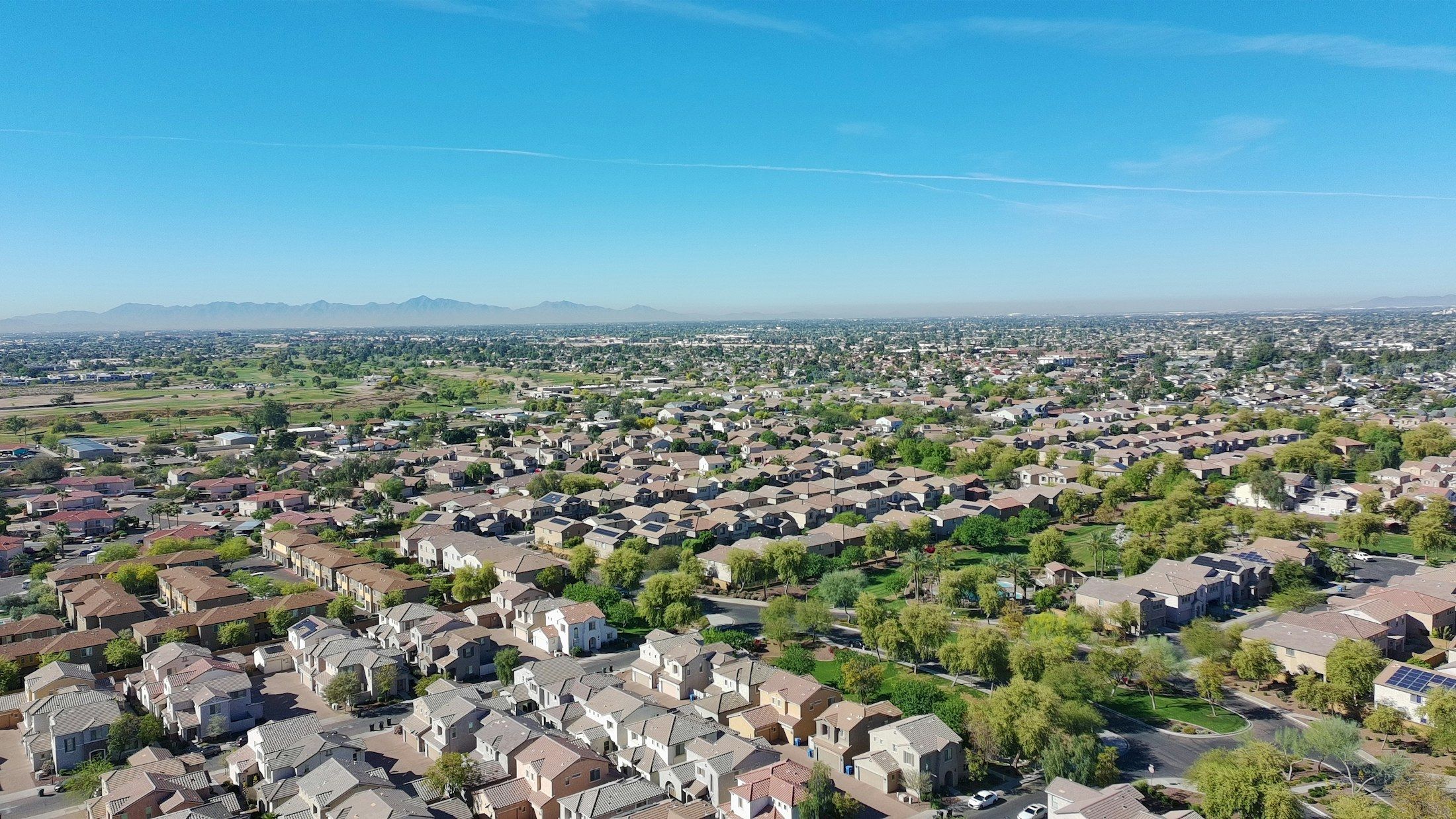
Why an empty house is a risk
When you’re home, a dripping supply line or a puddle by the water heater usually gets noticed within a day. In an empty house, nobody is there to see it. A split hose or a failed fitting can run until someone walks in the door.
That’s a real concern in parts of the Valley. Census survey data (American Community Survey, 2020 to 2024) counts about 10% of homes in Sun City and about 9% in Sun City West as vacant for seasonal, recreational or occasional use. In Fountain Hills the same data puts it near 12%, and a 2019 town report, using older Census figures, put it close to 16%. In Buckeye and El Mirage the share is about 3%.
Time is the problem. The EPA advises drying water-damaged materials within 24 to 48 hours to prevent mold growth. A leak in a house that sits empty for a month gives water weeks to soak into drywall, cabinets and flooring.
If you spend summers elsewhere, your house also sits empty through monsoon season, which the National Weather Service dates June 15 to September 30. Rain that gets in through the roof or under a door can go unnoticed too.
Before you leave: shut off the water
The simplest protection is to stop the water from reaching the house. The City of Phoenix’s household plumbing tips say: “For long periods away from home, shut off the water to your house and hot water heater where it enters the heater.”
- Find the main valve. The city says that for most houses it’s at the front of the home near a hose bib, on a pipe coming out of the ground and going into the house. Some older homes have it at the back. Our shut-off valve guide has more detail.
- Test it before the trip. The city also says to know where your shut-off valve is and to test it regularly. The Smart Home Water Guide, from the City of Phoenix and the Arizona Municipal Water Users Association, warns that old or corroded valves can fail or break and should only be turned by hand. If yours is stiff or won’t close all the way, have a plumber look at it before you go.
- Leave the meter alone. The City of Phoenix tells residents not to shut the water off at the meter. It takes a special tool, and you could be held responsible for damage to the meter.
- Close the supply at the water heater. That valve sits on the cold-water pipe feeding the tank.
Before you close the main valve, think about anything that needs water while you’re gone, such as landscape irrigation or a pool’s automatic filler. How those are plumbed varies from house to house, so ask a plumber or your landscaper whether closing the house valve affects them.
A walk-through before you lock up
Do this walk-through before you close the main valve, since the meter check needs the water on. It lets you fix small problems before they have weeks to grow.
- Sinks, toilets and supply lines. The Smart Home Water Guide says to check under and around sinks for “wet spots, a musty smell or bowed cabinetry,” and to look for continuous leaks in supply lines, fittings and valves. It calls toilet leaks the most common kind found inside the home.
- Washing machine hoses. Look for bulges, cracks or damp connections, and close the valves behind the washer.
- The water heater. ENERGY STAR lists leaks at joints or seams, visible corrosion, rust in the water and rumbling noises as warning signs. It says that if your heater may be more than 10 years old, it’s time to consider replacing it before you’re left with an emergency decision. The Smart Home Water Guide also says to look for corrosion leaks, such as a rusty water heater bottom. If you see rust or a drip, call a plumber before you leave.
- The AC condensate drain. If the air conditioning will run while you’re away, have the drain checked. ENERGY STAR says a plugged condensate drain can cause water damage in the house. A Department of Energy resource adds that clogged drains and overflowing pans in attics and closets can go undetected long enough to cause severe water damage. Ask your HVAC technician whether your system has an overflow switch that shuts it off when the pan fills.
- The evaporative cooler. University of Arizona Water Wise says that if a cooler’s float valve sticks, “the water will run continuously.” If nobody will use the cooler while you’re gone, ask about shutting off its water line.
- Other water-using devices. The Smart Home Water Guide lists water softeners, refrigerator ice makers and reverse osmosis systems among the devices to check for leaks.
- The water meter. The EPA’s WaterSense program suggests reading your meter before and after a two-hour period when no water is used. If the reading changes at all, you probably have a leak. Find it before you go.
Ask someone to check the house
The City of Phoenix’s travel tips suggest asking a friend or neighbor to check on your house daily. That tip is written for cold snaps, but the same visit catches leaks.
Give your house-checker a short list:
- Look at the floor around the water heater, washer, toilets and kitchen sink.
- Open the cabinets under sinks.
- Look up at the ceilings, especially near the AC closet and after heavy rain.
- Mention any musty smell or the sound of running water.
- Know where the main valve is and how to close it.
- Have your phone number and your insurer’s claim line.
Some water providers can also flag unusual use. Scottsdale customers can get leak alerts through the city’s smart meter program, and City of Surprise customers can see hourly use and set leak or high-use alerts. Ask your own provider what it offers before you leave.
If you come home to water
- Stay safe. The CDC says that if you can turn off the main power from a dry spot, do it. If you would have to stand in water to reach the panel, call an electrician. Don’t walk under a ceiling that’s sagging.
- Stop the water. Close the main shut-off if it isn’t already closed.
- Take photos and video first. Arizona’s Department of Insurance and Financial Institutions advises taking pictures before any plumber or restoration contractor shows up.
- Call your insurer. Note the day you left, the last time anyone checked the house and the day you found the water.
- Get the water out and start drying. The NAIC says that after a loss you’re required to protect your home from further damage. A restoration provider can remove standing water and use moisture meters to find water inside walls and under floors. See emergency water extraction and structural drying.
A plumber repairs whatever leaked. The restoration provider deals with the water it left behind.
When the leak ran for days or weeks
A long-running leak changes the job. A joint EPA and CDC guide says that if you couldn’t dry your home within 24 to 48 hours, you should assume you have mold growth. The same guide warns against using fans once mold has started, because they may spread it.
The EPA notes that mold may hide on the back side of drywall, the underside of carpets and pads, and inside walls around leaking pipes. It also says porous materials such as ceiling tiles and carpet may have to be thrown away if they become moldy. The IICRC’s water damage standard notes that time and temperature can change how contaminated water becomes, so water that sat for weeks may be handled more cautiously than a fresh leak.
The EPA says people with health concerns should talk to a health professional before cleanup starts. If mold covers more than about 10 square feet, the EPA points to its guide for professional mold remediation. See mold remediation and our guide to the signs of hidden mold.
Insurance and long-running leaks
The Insurance Information Institute says the standard HO-3 homeowners policy covers accidental discharge of water from a plumbing system, but “water seepage is excluded.” It adds that a policy won’t cover damage due to lack of maintenance. Arizona’s insurance department says water damage and mold remediation may be covered when they result from a sudden or accidental event.
A leak that ran for weeks in an empty house could land on either side of that line. It depends on the cause and on your policy’s wording. Before your next trip, ask your agent whether your policy has any conditions for a home left empty for long stretches, and whether you should tell the insurer you’ll be away. Our insurance guide covers the general rules.
Before you lock the door
- Check sinks, toilets, the washer hoses and the water heater.
- Have the AC condensate drain checked if the AC will run.
- Read the water meter twice, two hours apart, with no water running.
- Test and close the main water valve, turning it by hand.
- Close the cold-water supply at the water heater.
- Give someone a key, a checklist and the location of the main valve.